I think the purpose of blogging is for us as students to
understand that we have a voice. We as students should encourage one another to
speak on what we believe. Being able to go beyond a virtual classroom is important
because outsiders have access to read and learn with us. Having our thoughts made
public will expand the native history topic beyond just classrooms. It will
give people that are wondering about native culture access to talk about what
they know. It will give people access to learn and expand their mind and
knowledge. It is important to get our generation informed about topics and what
is going on in classrooms. Indigenous leader, Wilma Mankiller says "It’s important to remind everyday Americans that tribal governments existed before there was a United States government and that many tribes, including the Cherokee Nation, had treaties with other governments before they had a treaty with the first U.S. colony. So the definition of sovereignty is to have control over your own lands and resources and assets, and to have control over your own vision for the future, and to be able to have absolute, to absolutely determine your own destiny." (mankiller 2016). Having access to our classrooms blog will allow
others to do so. By blogging with students and giving outsider’s access, it is a
way of bringing people together. In a blog you are conversa ting with people of
all different backgrounds. It gives you satisfaction knowing you are not the
only person who is questioning something, or you are not the only one thinking
something. I think Professor Nesberg has encouraged us to share our knowledge
because there are people who are not aware. There are people that know nothing
about native histories (to be honest, I was one!). People need to understand
that native people are not just a chapter in k-12 that our school covered. Native
people are people who are living with us today who come from all different
beliefs, culture and values.
Sunday, August 28, 2016

Friday, August 26, 2016
Module 5 Interview With Wilma Mankiller
Wilma Mankiller who was the first female chief of the Cherokee Nation of Oklahoma, sat down for an interview with Ian Record for the University of Arizona. The interview is really used to gain an in-depth and firsthand experience into many issues that faces Native Nations today, as well as an overview of Wilma's personal journey through life as a Native American women.
I believe that this particular resource was selected and put into this course because Wilma is a leading figure in the world of Native Americans and is also directly involved in the issues that face Native Nations especially the ones highlighted throughout this course. A quality academic website in my opinion is a website that gives legitimate and pertinent information on a subject while also not being biased in anyway. The Native Nations Institute website via the University of Arizona is the perfect example of an academic website.
The purpose of making a Native American focused journal into a blog is to promote free form expression as well as thinking, to critically analyze information while being able to compare your own views to that of others, without being held to strict and specific guidelines. I think that we as a class were asked to express our knowledge in this type of forum because it shows a direct working knowledge of the subject as well as immediate feedback from peers as opposed to constant feedback from the instructor. Which would promote an actual fun understanding of subject material in order to be used in everyday conversation and it also showed us different points of view about the same subjects.
I believe that this particular resource was selected and put into this course because Wilma is a leading figure in the world of Native Americans and is also directly involved in the issues that face Native Nations especially the ones highlighted throughout this course. A quality academic website in my opinion is a website that gives legitimate and pertinent information on a subject while also not being biased in anyway. The Native Nations Institute website via the University of Arizona is the perfect example of an academic website.
The purpose of making a Native American focused journal into a blog is to promote free form expression as well as thinking, to critically analyze information while being able to compare your own views to that of others, without being held to strict and specific guidelines. I think that we as a class were asked to express our knowledge in this type of forum because it shows a direct working knowledge of the subject as well as immediate feedback from peers as opposed to constant feedback from the instructor. Which would promote an actual fun understanding of subject material in order to be used in everyday conversation and it also showed us different points of view about the same subjects.
Tuesday, August 16, 2016
Module 5 - Interview with Wilma Mankiller, Cherokee
Wilma Mankiller spoke with Ian Record
from the University of Arizona, Tucson Campus Native Nation Institute. The
topic was governance, leadership and the Cherokee Nation. Ms. Mankiller was the
first female Principal Chief of the Cherokee Nation of Oklahoma from 1985- 1995
(UOA, 2008). The Cherokee nation is the second largest Indian Nation with a
diverse population and socioeconomic status (UOA, 2008).
The
purpose of this interview was to discuss the challenges that the Cherokee
Nation has experienced and how Ms. Mankiller approached these difficulties.
The issue of sovereignty and self-governance
were examined as they directly affect the ability of individual tribes to
control their future and maintain self determination (UOA, 2008). MS. Mankiller
relates that for any project to be successful, the idea and work must come from
the people (UOA, 2008). Ms. Mankiller speaks extensively about her experiences
in California during a relocation program and how they influenced her thoughts
about leadership. The ‘solution comes from within’ when rebuilding families, communities
and tribes (UOA, 2008). Ms. Mankiller emphasizes that people need to believe in
themselves with a focus on assets not problems (UOA, 2008).
The
ability of Tribes to make decisions for themselves has been challenged
throughout history despite declarations of sovereignty. Tribal Nations should
be able to make their own decisions and allocate resources as they see fit
through individual tribal councils (UOA, 2008).
Although
no longer a tribal leader, Ms. Mankiller hopes to continue improve the lives of
the Cherokee Nation through education. The education of non-native people about
the true history and culture of the Indian Nations will improve the current
negative stereotyping and perception of the Native American (UOA, 2008).
"Wilma Mankiller: Governance,
Leadership and the Cherokee Nation." University of Arizona, Tucson, 29 Sept. 2008. Web. 16 Aug. 2016.
Monday, August 15, 2016
M5 Journal Blog
Wilma Mankiller worked for several years as a leading
advocate for the Cherokee people, and became the first woman to serve as their
principal chief in 1985. Throughout her discussion in the video assigned in
this module “Governance, Leadership, and the Cherokee Nation”, you can tell
that her life experiences gave her the empathy in order to successfully lead
from the front, but also toughness to make judgments and decisions that upset some
with a softer sensibility. Wilma Mankiller was not only an advocate for the
Cherokee people, but she was also a spokeswoman for women rights.
Wilma Mankiller was born in Tahlequah , Oklahoma San
Francisco helped her relate to the current struggles
of her Native American people. She worked to improve the tribal nation’s health
care, education system and local government. She decided not to seek
re-election in 1995 due to her declining health health. But her impact was set
in stone and will be felt for generations.
Wilma Pearl Mankiller was a descendant of the Cherokee
Indians, the Native Americans who were forced to leave their homelands; she was
also of Dutch and Irish descent. She grew up on Mankiller Flats, located near Rocky Mountain , Oklahoma ,
before moving with her family in the mid-1950s to San Francisco , California
Using this form of blogging has brought a new experience to my learning, in the beginning I felt it was very close to our requirements to the formal discussions in our class. But after participating in a couple, I found that it was the interactions with the other classmates that brought a new aspect to the learning. It was this kind of interaction I feel Wilma Mankiller was trying to enforce and motivate her Cherokee tribal community to learn. Greater strengths are with a community together, if its a course in college, or a tribal community trying to overcome discrimination. The strength will come in teamwork.
Work Cited:
Mankiller, Wilma. "Governance, Leadership, and the
Cherokee Nation." Leading Native Nations interview series. Native
Nations Institute for Leadership, Management, and Policy, University of Arizona Tucson , Arizona
Sunday, August 14, 2016
Czombel M5 Academic Journal Blog Assignment
In
watching the video "Governance, Leadership, and the Cherokee Nation" where
Wilma
Mankiller (1945-2010), was interviewed by Ian Record, I was impressed with her
personal and professional accomplishments, including receiving the Presidential
Medal of Freedom in 1998 from then President Bill Clinton, the United States’
highest civilian honor.
Wilma describes sovereignty
as the right to control your own lands, resources, and visions for the future,
determining your own destiny. It’s
important to remind Americans that tribal government existed prior to the
United States federal government that we know today, and that indigenous
peoples’ had treaties with several other countries prior to those with the
United States.
Mrs. Mankiller was elected
in 1983 as the Deputy Chief of the Cherokee
Nation of Oklahoma, and assumed position as the Principal Chief in 1985 when
Ross Swimmer resigned his post, becoming the first female ever elected as
Principal Chief of her nation. Wilma
went on to win two additional elections, before leaving office in 1995. Mrs. Mankiller described
that a healthy Native American community is one that provides equal access to
healthcare and education, active promotion of skills and abilities, while
preserving a sense of interdependence.
Mrs. Mankiller was very
proud of her Cherokee Nation, and the resiliency her people showed when faced
with adversity. Whether it was the continuous
shrinking of land base, the devastating removal process by the United States, or
allotment policies, the spirit of survival prevailed. In Oklahoma alone, the Cherokee Nation
rebuilt through family and community, constructing government buildings
including a supreme court building, establishing newspapers, school systems for
children and even schools to educate women.
In terms of leadership,
Wilma had many great ideas and philosophies to share. “Trust your own thinking”. Change can only be accomplished by including
thoughts and ideas from both families and the community they live in. Effective partnerships with outside parties may
be necessary to move forward and find solutions, but make sure you listen to
your people. There is a role for everyone
in transformation and growth, whether you can utilize a member’s skills to
grant write, or another as a heavy equipment repair. A specific example discussed was the Bell, Oklahoma
community project that concerned a local population with over 95% Cherokee, of
which only 25% had reliable indoor plumbing.
Mrs. Mankiller and her husband Charlie Soap led the project which provided
the community with technical assistance and resources, but utilized the communities
own people for physical labor to build a water system in order to provide clean
drinking water and indoor plumbing for their homes. This was a symbolic project, enabling the
community to rise to the occasion so they could have a brighter future.

Photo courtesy of http://www.thewaterwell.net/bell-waterline-project/
There is much more to glean from her video cited below, but in closing, it is essential as a good leader not to make unilateral decisions. Develop and surround yourself with diverse teams to help you problem solve, establish clear roles for your members, remain focused on two or three major things you want to accomplish during your tenure, engage your citizens or people, and carefully balance your professional and personal life.
Work Cited
Mankiller, Wilma. "Governance, Leadership, and the
Cherokee Nation." Leading Native Nations interview series. Native
Nations Institute for Leadership, Management, and Policy, University of
Arizona. Tucson, Arizona. September 29, 2008. Interview.
Saturday, August 6, 2016
Dr. Charles A. Eastman (Ohiyesa) - Module 3
Dr. Charles A. Eastman, M.D. (1858-1939), also known by his
Dakota name Ohiyesa, was an extraordinary man of the Wahpeton Santee people (a
Siouan band of Dakota-speaking people). I’ve
had the inspiring pleasure of reading one of his books some years ago, The Soul of an Indian. He’s the primary reason why I’ve opted to
investigate the closely-related tribal nations of the Santee (Dakota), Teton
(Lakota), and Wiciyela (Nakota) peoples for my Reflexivity project, in fact.
Having long been interested in learning more about his life,
I was pleased to find Paula Giese’s
biography on Dr. Eastman through the Native
American Authors web page. Giese
provides well cited information about him, with a bibliography that includes Eastman’s
own books. Her account of the life and
times of this eloquent American Indian advocate, while on the brief side and suffering
from a few grammatical errors and broken links, nonetheless portrays an
accurate account of the good doctor’s life.
When he graduated from Boston University Medical School in
1890, Dr. Eastman was one of the first American Indians to earn a medical
degree. Unlike many other American
Indian advocates of his generation, Eastman was traditionally raised by his
grandmother, Uncheeda, in the Santee tradition.
He did not enter the white American world until age fifteen. It was at this time that his father, Many
Lightnings, who had participated in a Santee reservation uprising fueled by very
inadequate food and horrendous treatment by the U.S., returned from prison. Taken aback by the overwhelming power of the
United States he’d experienced firsthand, Many Lightnings had Ohiyesa baptized
into Christianity as Charles A. Eastman, and sent him to the Flandreau Santee
Normal Indian School. Eastman tells us,
in Soul of an Indian (page xi) that his
father advised him, “it is the same as if I sent you on your first warpath. I
expect you to conquer.”
Dr. Eastman wanted to use his medical education to serve his people.
He found an opportunity to do so at the
Pine Ridge Indian agency in South Dakota, where he was hired as a physician. He met his wife-to-be here as well, the newly
appointed agency’s white supervisor Elaine Goodale. Goodale was sympathetic to American Indians,
and advocated for their welfare and education.
At the Wounded Knee Massacre, Eastman witnessed
firsthand the sheer cruelty the United States was capable of. Many unarmed Lakota men, women, and children
were slaughtered by the U.S. 7th Cavalry in this massacre. Their bodies were left to freeze in the
blizzard that came soon after that night. Both Eastman and Goodale spent the night and the
following day rescuing and medically treating the survivors. Dr. Eastman would soon after find himself fired
by his supervisors for favoring American Indian needs over conflicting Bureau
of Indian Affairs policies his position required him to follow.
The married couple moved to St. Paul Minnesota, where Dr.
Eastman practiced medicine again for a short time. But he was affronted by racists who could not
believe an American Indian man could legitimately obtain a medical license or
possess the wherewithal to practice medicine.
Now with two children, Eastman decided to drop the fight and found work
as a program organizer for the YMCA on reservations. He also worked for a time at the Carlisle
Indian Industrial School. At Carlisle, he
met Lakota activist and writer Zitkala-Sa
who encouraged Eastman to begin his writing career.
Dr. Eastman went on to become a courageous orator and writer,
advocating on behalf of American Indians more broadly. His writings leave us with a heartfelt portrayal
of his native people’s profound spiritual and social values, which he sought to
educate white audiences about. They also
reflect his own perpetual conflict, the struggle to live in a hostile world,
ever treading the line between native and white ways, or as he described them the
ways of life based on spirit and life based on commerce, respectively. He found the teachings of Jesus to be in
essence identical with his native religion, despite the hypocrisy of Christians
who sought after material wealth at all costs. His background in both worlds made Dr. Eastman
uniquely qualified among the prominent American Indian advocates of his era to directly
educate white audiences about native social and spiritual values.
His life’s work also revolved around combatting the
injustices suffered by American Indians more broadly, including treaty
violations and the concerted efforts of whites to annihilate native culture
such as through boarding schools. Dr.
Eastman also sought to keep the old stories of his people alive for children in
particular. Indeed, his concerns for both
native values and children led him to help pioneer the Boy Scouts program in
America. He believed it was a great way
to teach non-white children the sense of wonder and values he’d experienced
growing up in the wild, helping to bridge the divide between two worlds.
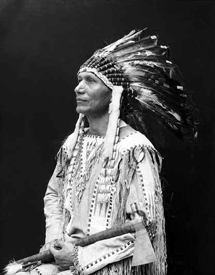
Image courtesy of LegendsOfAmerica.com
Works Referenced
Eastman, Charles Alexander. The Soul of an Indian: And Other Writings from Ohiyesa (Charles
Alexander Eastman). Ed. Kent Nerburn. Novato: New World Library, 2001.
Print.
Eastman, Charles Alexander. The Essential Charles Eastman
(Ohiyesa): Light On the Indian World. Ed. Michael Oren Fitzgerald. Kindle
ed. World Wisdom, 2007. eBook.
Giese, Paula. “Dr. Charles A. Eastman.” Native American Indian Resources. 13
July 1996. Web. 5 Aug. 2016. <http://www.kstrom.net/isk/stories/authors/eastman.html>.
Monday, August 1, 2016
Subscribe to:
Posts (Atom)